

The Sky’s The Limit
A publicity tour in 1925 offered promotion of a new car and a revolutionary airplane.
By 1925, the combination of producing durable cars offering performance and value along with imaginative marketing helped Hudson Motor Car Company to become America’s third largest automaker behind Ford and Chevrolet. In the same year, Hudson’s subsidiary Essex Motor Company decided to promote a new six-cylinder model in its popular Essex line by sending an example on a three-month tour to 39 cities via airplane.
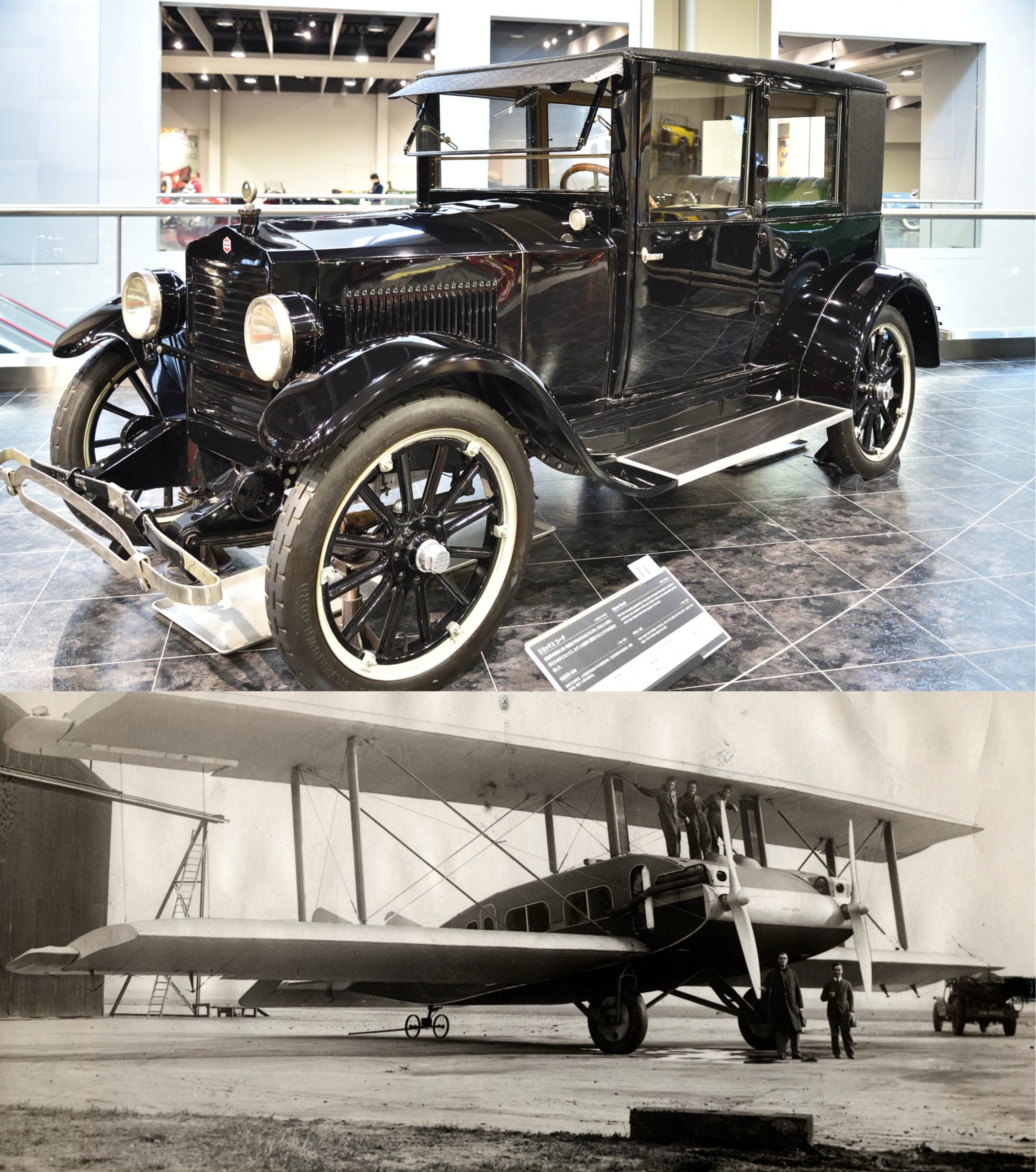
Media stars of 1925: the Essex Coach and the radical airfoil-shaped Remington-Burnelli RB-2. (Rikita via Wikimedia & Public Domain)
The airplane proposed was the Remington-Burnelli RB-2, at the time the largest aircraft in the world. It was the first dedicated cargo airplane and the second of a line of lifting-fuselage designs by Vincent Burnelli.
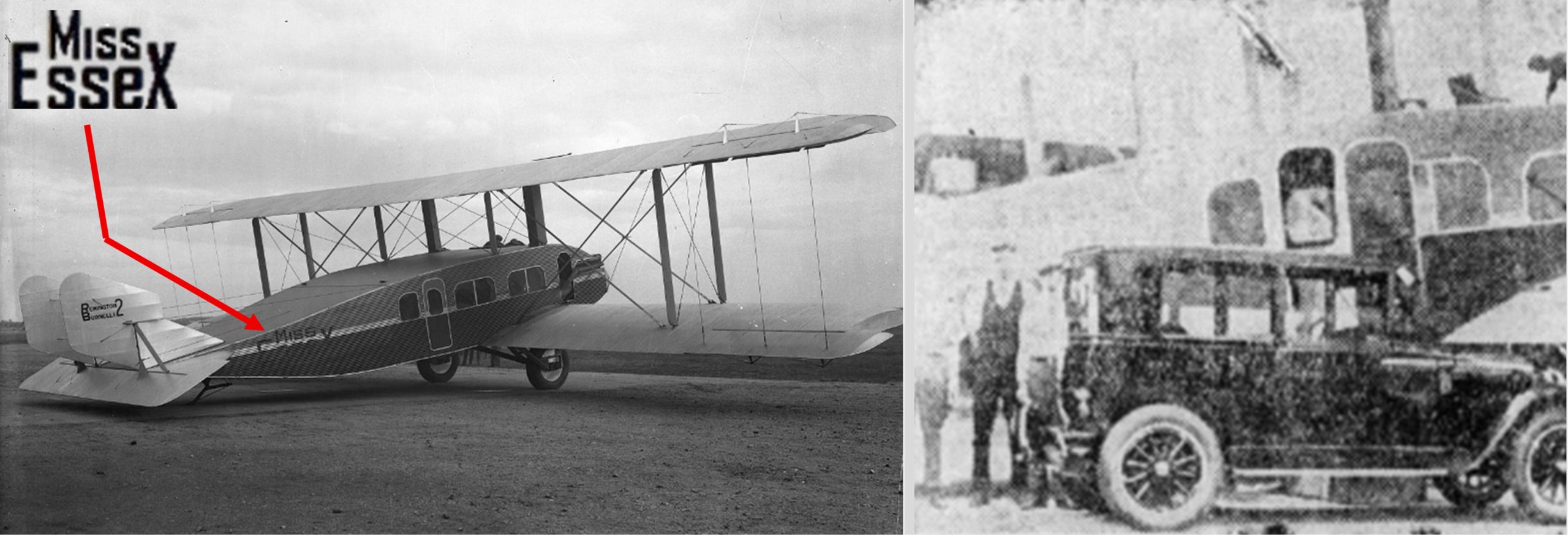
The RB-2 as “Miss Essex” and a grainy newspaper photograph of the Essex prior to loading. (Author’s collection)
Burnelli agreed to the use of the RB-2 because the publicity could also help him to sell the plane with its unique lift-producing body. For the tour “Miss Essex” was added to both sides of the rear fuselage and the car was secured in the plane’s 14-foot-wide by 6-foot-high interior, possibly after being disassembled then reassembled inside. The remaining space was occupied by office furniture and equipment to fulfill the RB-2’s role as a flying showroom.
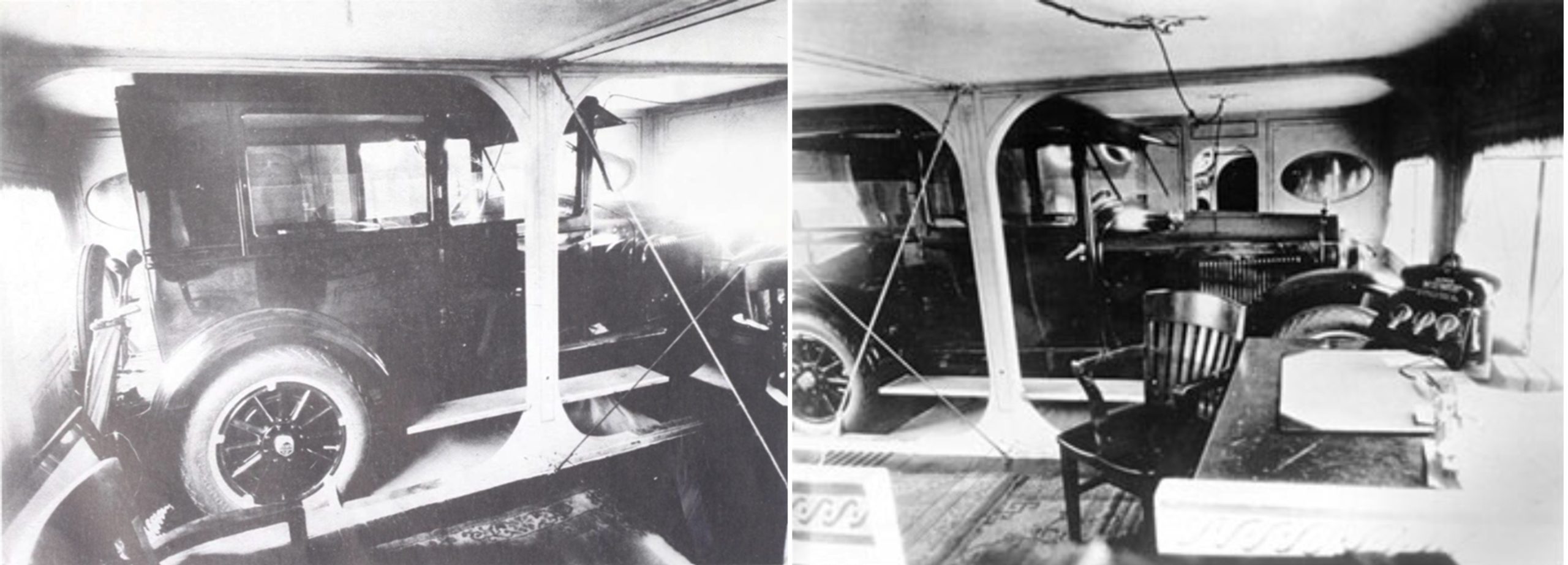
The Essex occupied half of the RB-2’s 14-foot-wide interior while the rest of its 15-foot length was set up as an office. (Flight)
Prior to the tour, on October 27, 1925 the RB-2 left its base at Brainard Field in Hartford, Connecticut carrying the Essex, four Boston newspaper reporters, and Burnelli on a demonstration flight. The flight was cut short after both engines stopped due to blocked fuel lines, forcing pilot Lt. George Pond (USN) to glide the plane into a field near Seekonk, Massachusetts. In the subsequent crash landing, no one was seriously injured and the Essex was unscathed.
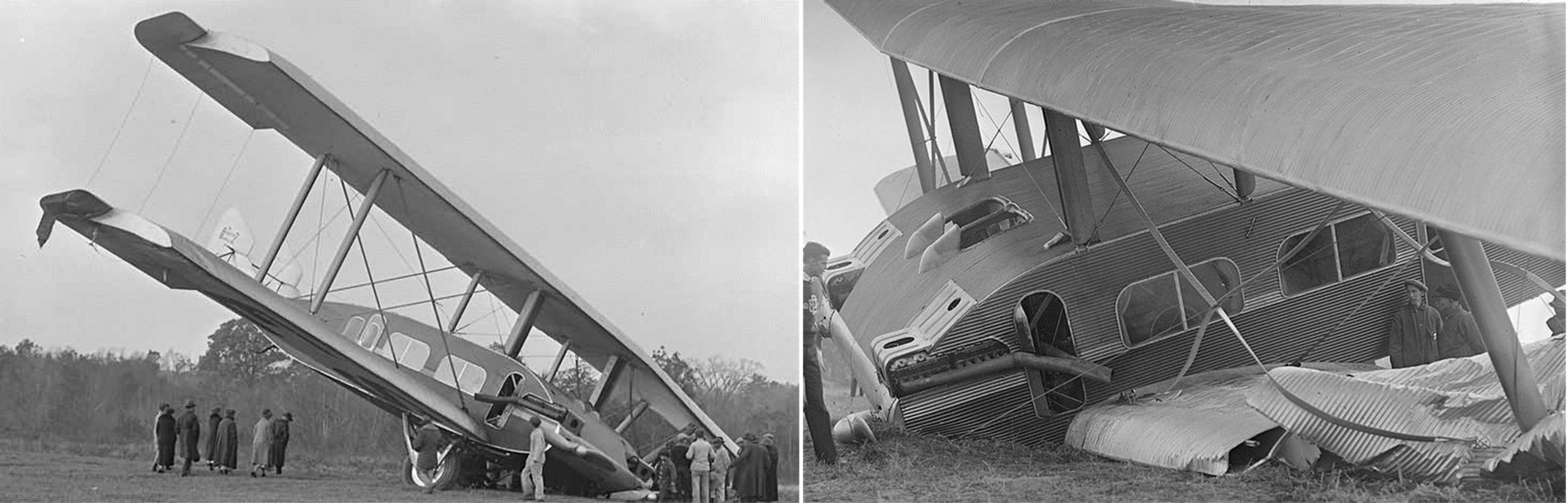
The RB-2 rests on its damaged left side; at right, note the open cockpits for the pilots atop the fuselage. Also, the rear-mounted spare tire of the untouched Essex car is visible in the window adjacent to the left door. (Leslie Jones Collection via Boston Public Library and Digital Commonwealth)
The RB-2 was disassembled and transported by barge to Hartford to undergo repairs. The tour was apparently canceled, although several newspapers later stated that it was completed, possibly due to publishing information from old press releases. Burnelli began work on a new lifting-fuselage design which was interrupted by the death of his financial backer Thomas Garvan. The Garvan family was not enthusiastic about aviation and soon withdrew support. This was not the end of Burnelli, as his new design became the prototype CB-16 through the support of a new backer, and led to the UB-20 referenced at the end of this story.
With regard to the Essex, it continued in production until Hudson began to phase out the brand in 1932 with its replacement, the Essex-Terraplane. Interestingly, not only did the car’s name have a connection to aviation, the company enlisted aviator Amelia Earhart as an endorser. The Essex-Terraplane was produced until 1934, afterwards the brand and models were known as Terraplane until production ceased after the 1938 model year.
Postscript: If the name of Vincent Burnelli seems familiar, it may be from a two-part story on CarShowSafari.com in 2023 about the use of his later UB-20 and a Ford roadster in a stunt to promote a new gasoline (“A New Height In Publicity”, https://carshowsafari.com/automobiles-and-airplanes/ and https://carshowsafari.com/a-new-height-in-publicity-part-2/). 